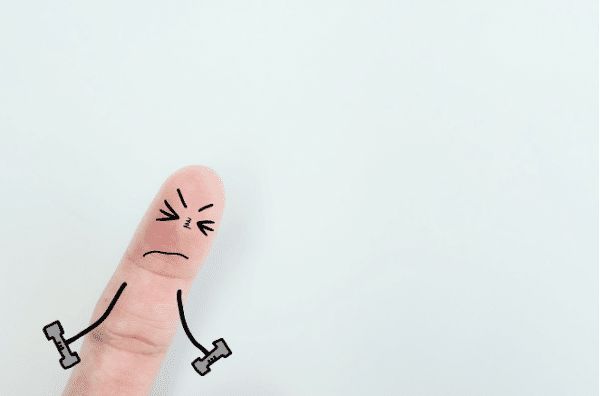
The medical ailment known as “trigger finger,” or stenosing tenosynovitis, impairs the fingers’ natural range of motion. It happens when the space inside the tendon sheath of the middle finger, index finger and ring finger narrows due to inflammation. The name of this ailment comes from the tendency for the finger to catch or lock in a bent posture before snapping straight, similar to pulling and releasing a trigger.
For many people, wearing trigger finger splints has shown to be an efficient non-surgical treatment option, although the disease can be uncomfortable and limit finger movement.
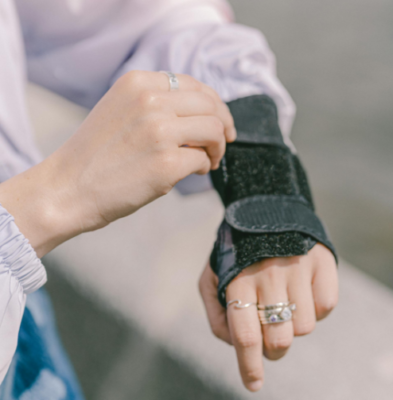
The purpose of trigger finger thumb splints is to immobilise the injured finger or thumb in an extended or slightly bent position. By limiting mobility and allowing the injured region to heal, the splint helps lessen the discomfort on the tendon.
Usually, the finger or thumb splint is constructed from supportive and comfortable materials to wear, such as breathable textiles with stiff inserts to immobilise the patient. Because the straps are adjustable, the splint may be worn on fingers or thumbs of different sizes or, if needed, on different fingers or thumbs thanks to its close fit.

The main advantage of having a trigger finger or Thumb splint is the reduction of discomfort. As the splint limits mobility, the inflammatory tendon sheath has more time to heal and relax, which greatly lessens discomfort.
Furthermore, in time, the immobilisation offered by the finger or thumb splint may help in the restoration of the fingers or thumb’s natural mobility, enhancing hand function for daily tasks.
Trigger finger or thumb splints provide a non-invasive therapy alternative for those patients who want to avoid surgery. They may be especially suitable for people with mild to moderate symptoms or those for whom surgery carries a higher risk because of underlying medical issues.
The inexpensive at-home therapy option is to utilise trigger finger or thumb splints. Many people find them to be a handy alternative because of this, especially when weighed against the expense, complications and duration of more intrusive treatment choices like surgery. Splints may also be simply removed or changed for bathing, improving comfort and personal hygiene.
The amount of support required, the splint’s material, and your preference for a splint that enables some finger & thumb mobility or one that immobilises the finger or thumb should all be considered. You can get further information and make sure that the splint you choose is appropriate and suitable for the seriousness of the condition by speaking with a healthcare professional.
Splinting: One of the first-line therapies is splinting, which aims to immobilise the afflicted finger or thumb so that the inflamed tendon can recover and relax.
The finger or thumb is usually kept extended with a splint to avoid bending and straightening actions that might aggravate symptoms. Splints are a useful non-invasive therapy option because they restrict mobility, which helps to lessen discomfort, edema, and tendon sheath irritation.
Exercises: The affected finger’s or thumb strength, range of motion, and flexibility can all be enhanced with exercises. Extending the tendon with mild stretching activities can help reduce stiffness and encourage more fluid movement.
Conversely, strengthening activities strengthen the surrounding muscles of the injured region, which may lessen the tension on the tendon. It is important to be cautious when performing these workouts to prevent aggravating the affected finger or thumb.
Medication: The discomfort and inflammation associated with trigger finger or trigger thumb can be managed with nonsteroidal anti-inflammatory medications (NSAIDs), such as ibuprofen or naproxen.
These drugs are usually used for the temporary alleviation of symptoms and are especially useful for controlling pain in the early phases of therapy. NSAIDs relieve symptoms by preventing the body’s inflammatory enzymes from functioning.
Steroid Injection: Steroid injections close to the tendon sheath site can lower inflammation and are frequently successful in symptom relief, resulting in pain relief.
The corticosteroid injection process is completed in a doctor’s office and is a somewhat rapid process. Local anaesthesia can be used to minimise pain during the surgery, even if the injection could cause some discomfort. The advantages of steroid injections may eventually wear off despite their efficacy, and some patients may have a relapse of their symptoms.
Surgery: When non-pharmacological therapy are unable to relieve trigger finger or trigger thumb symptoms or when the illness is extremely severe, surgery may be considered.
In order to provide the tendon greater freedom to glide, the restricted area of the tendon sheath is removed during the surgical technique known as trigger finger release. Patients can return home the same day after this surgery, which is usually done as an outpatient under local anaesthesia.
Corticosteroid injection: It’s a popular and effective treatment for trigger finger & trigger thumb, particularly in those who have not responded to more conservative methods such as splinting, rest, and physical therapy.
By immediately injecting these injections into the tendon sheath, the inflammation and swelling are reduced, which can lessen discomfort and the sensation of the finger or thumb catching or locking.
Repetitive motion or using the finger or thumb forcefully is the main cause of trigger finger or trigger thumb. The tendon fibres that bend the fingers & thumb may become inflamed as a result of this repeated action, causing the sheath to shrink and the finger or thumb to bulge.
This ailment is more likely to develop in jobs or activities that require extended gripping and repetitive hand use. Additionally, because they are linked to inflammation in the body, several medical illnesses including rheumatoid arthritis and diabetes might make it more likely that you will have a trigger finger or trigger thumb.
Some people with a trigger thumb or finger may find that they benefit from ball squeezing, mostly as a mild kind of exercise to keep their range of motion and avoid stiffness in trigger thumb. It should be done carefully, though, and not until it hurts.
Though they are not a cure, gentle finger & thumb exercises can assist movement and may lessen the intensity of symptoms. Balancing rest and activity is crucial; although keeping the finger or thumb active is advantageous for patients, too much strain should be avoided.
Overuse or activities that involve repeated finger or thumb bending or grasping might cause flare-ups. Due to the general increased propensity for tendon inflammation, inflammatory disorders such as diabetes or rheumatoid arthritis can also trigger flare-ups. Cold weather or physical activity can aggravate the illness by putting stress on the hands, thumbs or fingers.
The length of time it takes to fix itself might vary greatly from person to person based on the severity of the issue. With conservative therapy, such as rest, splinting, and anti-inflammatory medication, patients with mild instances may recover in a few weeks. More severe cases—especially those that need surgery or steroid injections—may take many months to fully heal.
To support and speed up the healing process, following a recommended treatment plan is crucial. It’s critical to set reasonable expectations and recognise that, particularly for children in circumstances when assistance is not provided, certain issues may take longer to settle.
For a few different reasons, trigger finger or trigger thumb experiences frequently get worse during night.
First off, the hand, fingers and thumbs are usually in a relaxed condition for a considerable amount of time when they sleep. Holding the finger or thumb straight can cause stiffness and increased fluid build-up in the tendon sheath and surrounding tendons.
Second, the finger or thumb may get coiled after being immobile for a few hours, increasing the likelihood that it may catch or lock when you try to move it in the morning.
By keeping the finger or thumb in a more straight posture overnight, using a splint may help with swelling and lessen morning discomfort.
Since massage therapy helps to increase circulation and relieve stress in the afflicted finger, Thumb and palm, it can be an effective supplementary treatment for trigger finger or trigger thumb. Relief from symptoms can be achieved with methods such as applying a light massage along the affected area, finger, thumb and palm, concentrating on the tendons and muscles.
Even though massage could help lessen the frequency of finger or thumb locking or catching and offer short-term comfort, it is unlikely to completely “massage away” the condition—especially in more severe cases. For optimal results, massage should be used with other therapies such as splinting and exercises.
Straightening the affected finger or thumb gently is the first step in unlocking a trigger. If the finger or thumb is trapped in a bent posture, it may occasionally be released by slowly extending it with the opposite hand. Before trying to straighten the finger or thumb, using warm compresses might help relieve some of the stiffness. It’s crucial to move carefully when doing this to prevent injuring yourself further. Medical assistance could be required if there is no way to manually unlock the finger or thumb.
Heat treatment is useful for trigger finger or trigger thumb because it promotes blood flow to the injured area, relaxes and loosens tissues, and promotes healing. Pain and stiffness can be relieved by applying warm compresses or heat packs to the palm and afflicted finger & thumb for ten to fifteen minutes, many times a day. To prevent burns or further discomfort, it is crucial to make sure the heat is not too strong. For best effects, heat therapy is frequently used in conjunction with other therapies.
In more severe cases where finger splints and exercises fail to provide adequate relief, steroid injections or corticosteroid injections may be recommended. These injections help reduce the inflammation in the affected area, such as the middle joint or distal interphalangeal joint. If a patient experiences recurring symptoms after a second injection, open surgery may be necessary, where a small incision is made to release the triggering tendon. This is often a highly effective treatment for restoring full movement.