Finger arthritis is a common condition that makes everyday tasks such as gripping, typing, or opening a jar a real pain, literally. You know the drill: morning stiffness, pain, and swelling, and a reduced grip strength that’s really frustrating. Or maybe you wake up one day, and your fingers are achy and stiff; that’s a pretty good indication something’s going on.
If you’re experiencing symptoms of finger arthritis, it’s a good idea to consult a healthcare professional. Early recognition and treatment are crucial for managing the symptoms, maintaining your hand function, and preventing the condition from worsening.

Arthritis is a bit of a catch-all term for joint pain, inflammation, and loss of mobility. When it affects your hands, it usually targets the finger joints, thumb joints, and sometimes the wrist joint. Finger arthritis can affect:
As arthritis progresses, cartilage wears, bone forms at joint margins, and bone spurs or bony lumps may develop, leading to stiffness, deformity, and loss of joint stability.
Osteoarthritis is the most common kind of arthritis, and it tends to affect the same joints again and again. It usually involves the distal interphalangeal joint and proximal interphalangeal joints, as well as the base of the thumb.
Some of the key features to look out for are
After the age of 50, women are more likely to develop osteoarthritis in their fingers, and if you’re overweight or obese, you’re putting extra pressure on your joints, which can make things worse.
Rheumatoid arthritis is an autoimmune disease that attacks the lining of the joints. It commonly affects many joints, particularly the MCP and PIP joints in the hands and fingers.
Symptoms may include:
Blood tests are often used to support diagnosis, alongside imaging and physical examination.
Psoriatic arthritis can affect people with psoriasis, and it can target just a few joints or a load of them. Your fingers may swell right up, a condition known as dactylitis, which can cause stiffness and pain right across your digits.
Genetic factors can increase the risk, and if you don’t get treatment for psoriatic arthritis, you may end up with long-term joint damage.
Finger arthritis can also be caused by:
Early symptoms often include:
As the condition affects the joints over time, you may also experience:
The factors that increase the risk of developing finger arthritis are:
Keeping a healthy weight, giving up smoking, and protecting your joints may help prevent finger arthritis or delay its progression.
Diagnosis usually involves:
The earlier you get a diagnosis, the better your chances of treatment working and limiting the damage to your joints.

There’s no cure for finger arthritis, but there are a lot of treatments available to help reduce pain, improve function, and make life a little bit easier.
Some of the common approaches include:
Always get advice from a doctor before taking any medication.
Splints help:
They are particularly effective for managing thumb base arthritis.
Working with a hand therapist or occupational therapist is a game-changer. They can help you:
Applying hot or cold therapy can help:
Surgery comes into play when nothing else is working, all the non-surgical options have been given their chance, but symptoms are still hanging around.
Joint fusion stabilises the joint by preventing movement, which reduces pain but limits motion.
Joint replacement involves replacing the affected joint with an implant to restore function and relieve pain. Recovery often takes around three months.
Used to improve movement when tendons restrict motion.
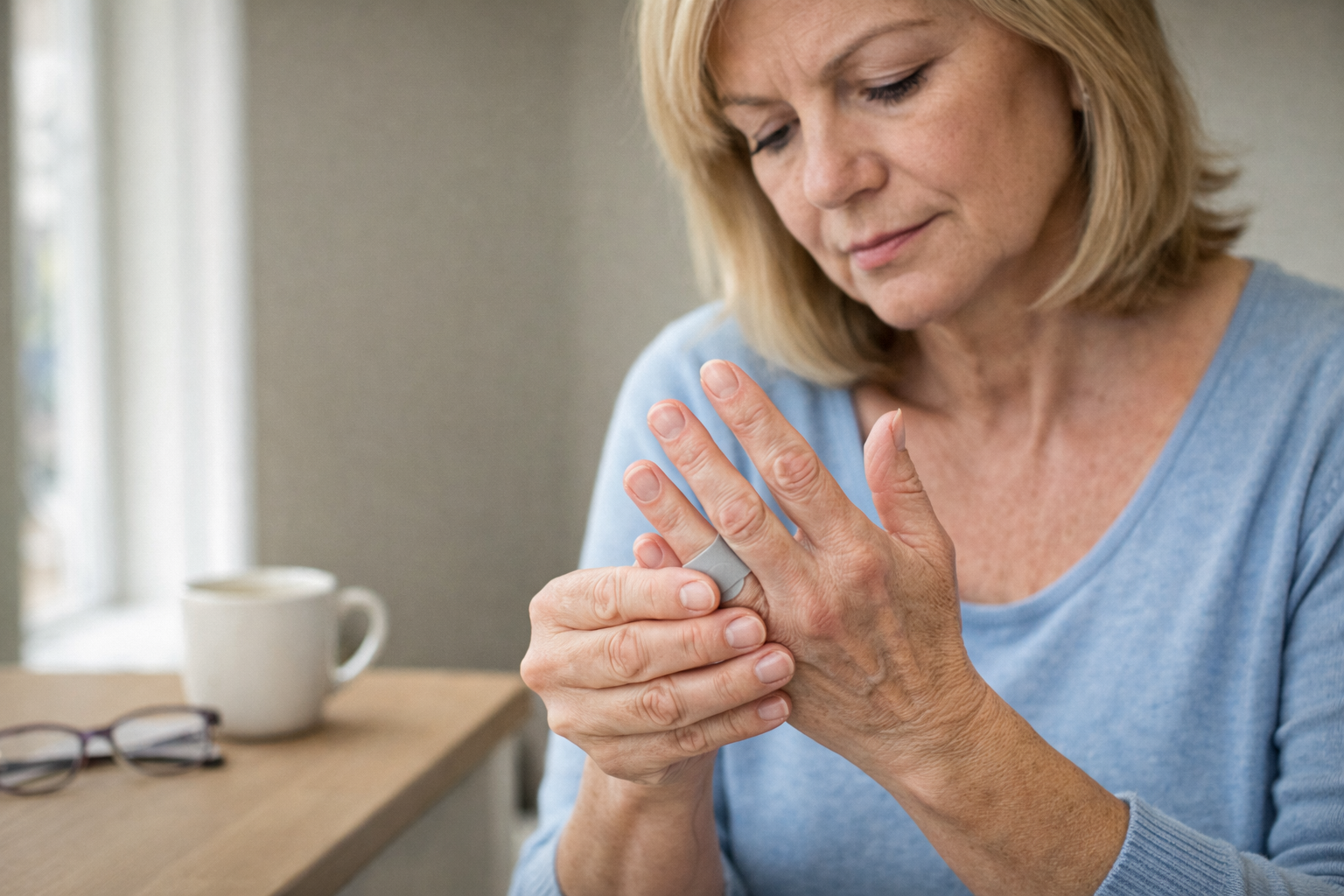
Finger arthritis can really get in the way of day-to-day life and independence, but with a bit of early action, some lifestyle changes, and some tailored treatment, most people find they can manage symptoms and still keep their hands working happily.
If you start to notice pain, swelling, or stiffness in your fingers or wrists, pop in for a chat with a medical professional. Early action can help with all those symptoms, reduce deformity, and give your joints a fighting chance for the future.